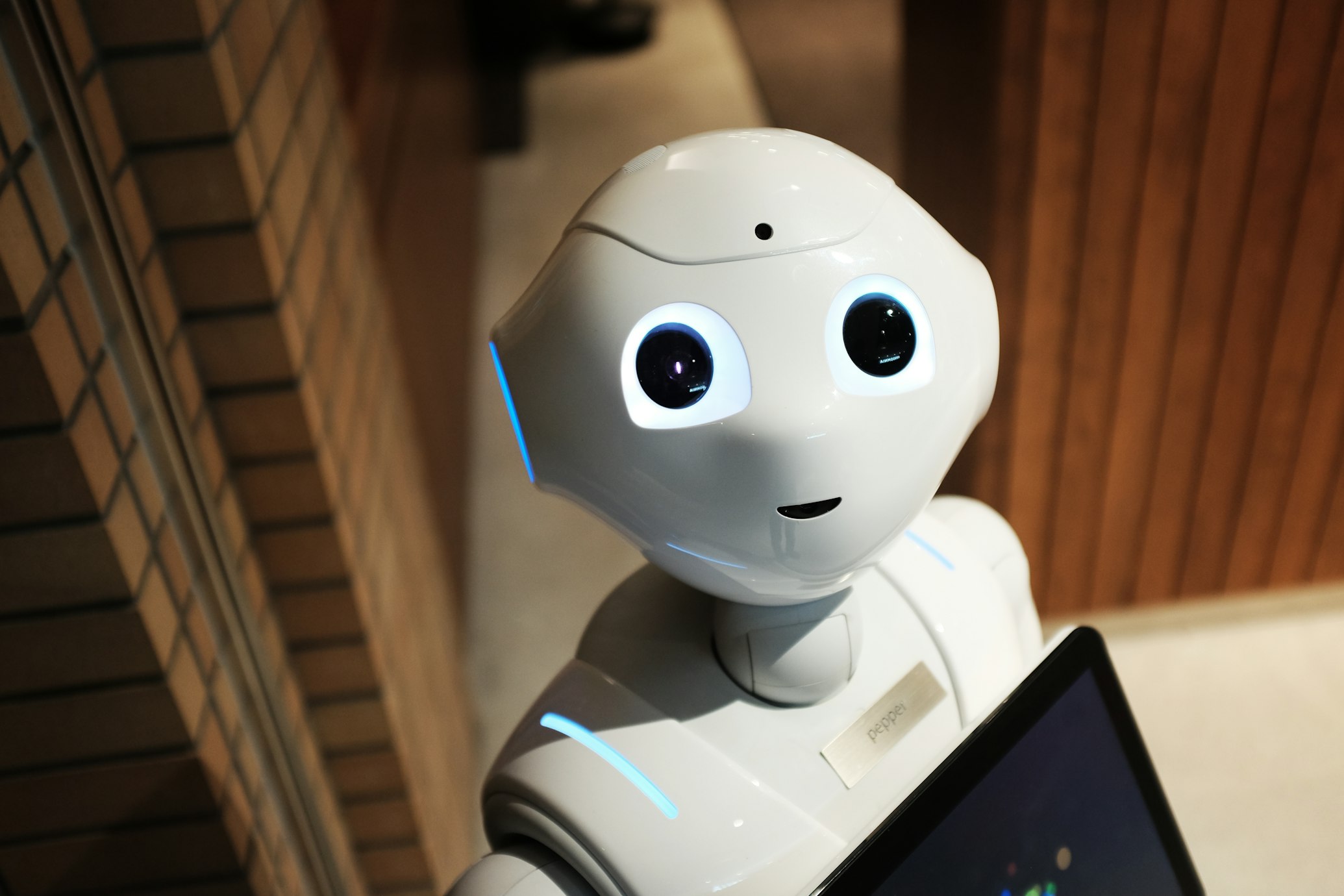
The year is 2026, and the global labor market is experiencing its most profound transformation since the Industrial Revolution. Generative Artificial Intelligence, autonomous agents, and highly sophisticated machine learning models have moved out of the laboratory and into the core of corporate infrastructure. For students planning their futures, and parents guiding those decisions, a singular, terrifying question dominates every conversation at the dinner table: "Will my future job be replaced by AI?"
The anxiety is palpable, and frankly, it is entirely justified. We have witnessed AI systems pass the bar exam, diagnose complex diseases with higher accuracy than seasoned specialists, generate production-ready code in milliseconds, and draft legal briefs that rival senior partners. The traditional paradigm of career security—which dictated that if you acquire a white-collar degree and memorize sufficient domain knowledge, you will be guaranteed a stable income until retirement—is dead.
However, amidst the panic, a critical nuance is often lost. Artificial Intelligence is not replacing human beings indiscriminately. It is replacing tasks. Specifically, it is replacing cognitive tasks that are highly predictable, heavily reliant on historical data, and fundamentally repetitive. The future of work is not a dystopian wasteland devoid of human labor. Instead, it is a highly stratified landscape where the premium on uniquely human traits—empathy, complex physical dexterity, ambiguous problem solving, and original creative vision—has skyrocketed. We are entering the era of the AI-Resilient Career.
In this definitive 2026 guide, we will systematically dismantle the automation anxiety. We will explore the fundamental laws that dictate what AI can and cannot replace, and we will provide a comprehensive, deep-dive analysis of 20 high-paying, future-proof careers that are structurally immune to complete AI replacement by 2030 and beyond. Most importantly, we will outline the actionable strategies students must adopt today to guarantee their relevance in the automated economy of tomorrow.
1. The 3 Laws of AI Replacement: Understanding the Automation Matrix
Before we can identify which jobs are safe, we must definitively understand the mechanics of AI replacement. Why does an AI algorithm effortlessly replace a mid-level data entry clerk but completely fail to replace a kindergarten teacher? The answer lies in what economists and technologists call the Automation Matrix, governed by three fundamental laws:
Law 1: The Predictability Principle
AI models, at their core, are probabilistic prediction engines. They ingest massive amounts of historical data, identify patterns, and predict the most statistically probable next step. If a job consists of predictable inputs leading to predictable outputs, it is highly susceptible to automation. For example, tax preparation follows strict, predictable legal codes. Therefore, routine tax preparation is highly automatable. Conversely, crisis PR management involves highly unpredictable human emotions and volatile public sentiment, making it inherently resistant to algorithms.
Law 2: The Physical Ambiguity Principle
While software AI has advanced exponentially, robotics and physical manipulation in unstructured environments remain incredibly primitive. Moravec's Paradox famously observed that high-level reasoning requires very little computation, but low-level sensorimotor skills require enormous computational resources. An AI can beat a grandmaster at chess, but a robot cannot easily navigate a cluttered living room to fold laundry. Jobs requiring complex physical dexterity in unpredictable physical spaces are highly resilient.
Law 3: The Human Connection Principle (The Empathy Deficit)
Human beings are biologically wired for social connection. Even if an AI could perfectly simulate the words of a therapist, a grieving patient fundamentally requires the presence of another conscious, lived human being to feel truly heard and validated. In scenarios involving trauma, trust, high-stakes negotiation, or deep emotional vulnerability, humans demand humans. The "Empathy Deficit" in AI forms the ultimate protective moat around specific professions.
Understanding these three laws is the key to navigating the future. If a career exists at the intersection of high unpredictability, complex physical environments, or deep emotional connection, it is fundamentally AI-resilient.
Category 1: Deep Empathy & Human Connection Careers
As cognitive tasks are handed over to machines, the economic value of emotional intelligence, compassion, and human connection is surging. These roles require the practitioner to read subtle body language, navigate complex psychological trauma, and establish deep bonds of trust that an algorithm simply cannot replicate.
1. Clinical Psychologists and Mental Health Therapists
Why AI Cannot Replace It: The therapeutic alliance—the relationship of trust between a therapist and a client—is the strongest predictor of positive outcomes in psychology. AI chatbots can provide cognitive behavioral frameworks or mindfulness exercises, but they cannot provide genuine empathy. A patient dealing with profound grief or complex PTSD requires a human being who can share their emotional weight, read micro-expressions, and navigate the unpredictable landscape of human trauma.
The Future Outlook: As technological isolation increases, the demand for mental health professionals is skyrocketing. Therapists will use AI to handle patient scheduling, draft session notes, and analyze behavioral data, but the core therapeutic intervention will remain exclusively human.
2. Human Resources (HR) Strategic Leaders & Conflict Mediators
Why AI Cannot Replace It: Basic HR tasks like payroll processing, resume screening, and compliance reporting are already automated. However, resolving a deeply personal conflict between two key executives, managing corporate culture during a painful restructuring, or handling sensitive employee grievances requires profound emotional intelligence and nuanced judgment. An algorithm cannot mediate a toxic workplace dynamic because it lacks the capacity to understand the irrational, emotional drivers of human behavior.
3. Special Education Teachers and Early Childhood Educators
Why AI Cannot Replace It: While AI tutors can deliver personalized math problems to a high school student, educating young children and those with special needs involves intense behavioral management, emotional regulation, and physical intervention. A special education teacher reads a child's frustration before a meltdown occurs, adapts their tone of voice, and provides physical reassurance. These are deeply human sensorimotor and empathetic responses that no screen or robot can emulate.
4. Hospice Care and Specialized Nursing Professionals
Why AI Cannot Replace It: Medical diagnostics and treatment planning are being revolutionized by AI. However, the delivery of care—especially end-of-life care—is a profoundly human endeavor. Administering a palliative drug is only a fraction of the job; holding a dying patient's hand, comforting their terrified family, and providing dignity in their final moments is the core value. Caregiving in high-vulnerability environments is the ultimate AI-proof profession.
Category 2: Complex Physical Dexterity & Unpredictable Environments
Robotics development is lagging decades behind software development. While AI can draft a 100-page architectural blueprint in seconds, we do not have robots capable of navigating a messy, unpredictable construction site to install custom plumbing. Careers in this category rely on complex, adaptive physical movement.
5. Specialized Surgeons and Emergency Trauma Physicians
Why AI Cannot Replace It: Robotic surgery (like the Da Vinci system) exists, but it is entirely human-controlled. While AI will assist surgeons by highlighting tumors on a screen or predicting blood loss, the act of operating inside a dynamic, unpredictable human body—where an artery might unexpectedly rupture or an organ might present anomalies—requires instant physical adaptation and split-second judgment. A trauma bay is chaos; AI requires structure.
6. Advanced Electricians and High-Voltage Linemen
Why AI Cannot Replace It: A residential electrician does not just connect wires; they navigate crawling through cramped, dusty attics, identifying non-standard wiring from 1950s renovations, diagnosing complex localized faults, and physically pulling cables through walls. The physical environment is entirely unpredictable, requiring massive situational awareness and manual dexterity that robots simply do not possess.
7. Aviation Mechanics and Specialized Heavy Machinery Technicians
Why AI Cannot Replace It: Diagnosing a strange vibration in a commercial jet engine involves sight, sound, smell, and tactile feedback. A mechanic must contort their body to reach hidden components, apply exact physical torque in tight spaces, and use profound physical intuition. While AI diagnostic tools will provide the mechanic with better data, the physical execution of the repair in an unstructured hangar environment remains an exclusively human domain.
8. Environmental Scientists and Field Biologists
Why AI Cannot Replace It: Analyzing satellite data for deforestation is a perfect job for AI. But trekking through the Amazon rainforest to collect soil samples, tagging elusive wildlife, and adapting to unpredictable weather patterns and physical hazards requires a human. Fieldwork relies on the ability to survive, adapt, and navigate the chaos of the natural world.
Category 3: High-Level Strategy & Ambiguous Problem Solving
AI is a brilliant tactical executor, but it is a terrible overarching strategist. It can optimize a specific variable, but it cannot decide which variable is actually important. Careers involving ethical ambiguity, visionary strategy, and complex human negotiation are safe.
9. Chief Executive Officers (CEOs) and Startup Founders
Why AI Cannot Replace It: Leadership is not just about making optimal mathematical decisions; it is about inspiring people, casting a vision that does not yet exist, taking calculated irrational risks, and absorbing the emotional burden of failure. An AI cannot inspire a workforce to work through the weekend, nor can it sit down with venture capitalists and convince them to trust in a founder's resilience. Entrepreneurship is inherently about challenging the status quo—an AI, which predicts based on historical data, is fundamentally bound by the status quo.
10. Corporate Lawyers and High-Stakes Litigators
Why AI Cannot Replace It: The discovery process—reading millions of emails to find relevance—is already fully automated. Basic contract drafting is automated. However, walking into a courtroom, reading the facial expressions of a jury, aggressively cross-examining a hostile witness, and finding the emotional narrative that sways a judge requires immense human intuition. In the boardroom, structuring a complex merger involves negotiating human egos, power dynamics, and unwritten cultural rules that algorithms cannot process.
11. Ethical AI Strategists and Tech Compliance Directors
Why AI Cannot Replace It: As AI becomes ubiquitous, companies are facing unprecedented ethical dilemmas. If an autonomous vehicle crashes, who is liable? If an HR algorithm accidentally discriminates against a minority group, how is it fixed? These professionals translate complex human morality, societal values, and legal frameworks into technological guardrails. An AI cannot audit its own ethical implications because morality is not a mathematical equation; it is a continuously evolving human consensus.
12. Urban Planners and Civic Architects
Why AI Cannot Replace It: An AI can easily design a city grid that optimizes traffic flow. However, an AI does not understand what makes a neighborhood feel "alive," how a park design impacts community mental health, or how to navigate the vicious political battles of zoning boards and angry citizens. Urban planning requires balancing ruthless efficiency with human sociology and political negotiation.
Category 4: True Creative Visionaries
Generative AI (like Midjourney, DALL-E, and advanced LLMs) has commoditized derivative creativity. It can instantly generate an image in the style of Van Gogh or write a blog post that sounds like a generic marketer. However, it cannot generate true, paradigm-shifting novelty. It lacks a soul, lived experience, and cultural angst.
13. Original Concept Artists and Cultural Provocateurs
Why AI Cannot Replace It: Commercial illustrators drawing generic stock art are losing their jobs. But artists who define new cultural movements, whose art is intrinsically tied to their personal trauma, identity, or political stance, are thriving. Human beings buy art not just for the image, but for the story of the human who created it. We care about the struggle behind the masterpiece. An AI has no struggle, therefore its art, while aesthetically pleasing, often feels emotionally hollow.
14. High-End Creative Directors and Brand Architects
Why AI Cannot Replace It: An AI can generate a thousand logo variations. But it takes a human Creative Director to look at those variations, understand the cultural zeitgeist, feel the emotional resonance of the brand, and select the one image that perfectly captures the company's ethos. The job is no longer "creating the pixels"; the job is "curating the vision." Taste, judgment, and cultural intuition are irreplaceable.
15. Novelists, Screenwriters, and Deep-Form Journalists
Why AI Cannot Replace It: AI can write a functional news report about stock prices. It can even write a mediocre generic screenplay. But it cannot write a deeply moving, semi-autobiographical novel that captures the precise nuance of a complex human relationship. It cannot conduct a deep-cover investigative journalism piece that requires building trust with a terrified whistleblower in a parking garage. Deep narrative requires a human soul.
Category 5: The "Centaur" Careers (Human + AI Collaborators)
The most rapidly growing category of future-proof jobs are the "Centaurs"—humans who are heavily augmented by AI. These professionals use AI as an exoskeleton to achieve superhuman results, but the human remains the indispensable pilot.
16. AI Product Managers
Why AI Cannot Replace It: Building an AI product requires understanding user psychology, business constraints, and technical feasibility. The AI Product Manager sits at the intersection of engineering, marketing, and the end-user. They define what the AI should do and why it matters. Algorithms cannot define product-market fit. (For a deep dive into this role, explore our Complete Guide to Becoming an AI Product Manager).
17. Prompt Architects and AI Interaction Designers
Why AI Cannot Replace It: AI models are powerful, but they are often difficult to control. Prompt Architects are experts in linguistic engineering, designing the complex, multi-layered prompts and systemic instructions that constrain and direct the AI to produce reliable, safe, and highly specific outputs for enterprise applications. It requires a deep understanding of human language, logic, and machine architecture.
18. Cybersecurity Incident Response Directors
Why AI Cannot Replace It: AI is heavily used in cybersecurity to detect anomalies and automate defenses. However, hackers are also using AI to generate novel, zero-day attacks. When a massive, unprecedented breach occurs, a human Incident Response Director is required to make high-stakes, ambiguous decisions—like whether to shut down a hospital's entire network, how to communicate with law enforcement, and how to outthink a highly creative human adversary on the other side of the screen.
19. Bioinformatics Strategists
Why AI Cannot Replace It: AI is revolutionizing drug discovery by folding proteins and simulating molecular interactions in seconds. But a Bioinformatics Strategist determines which diseases to target based on economic viability and human suffering, interprets the AI's findings within the complex framework of human clinical trials, and navigates the FDA approval process. The AI is the lab assistant; the human is the Principal Investigator.
20. Specialized Wealth Managers and Financial Therapists
Why AI Cannot Replace It: Robo-advisors and AI trading algorithms manage portfolios perfectly. But money is deeply emotional. A high-net-worth individual dealing with an inheritance, a divorce, or selling a family business does not want to talk to an algorithm. They want a human Wealth Manager who acts as a financial therapist, helping them align their wealth with their complex personal values and family dynamics.
Industries at the Highest Risk by 2030: What to Avoid
While the 20 careers listed above are safe, it is crucial for students to understand what is not safe. If a career involves sitting at a desk, processing structured data, and following a strict set of rules, it will face catastrophic job loss. Students should be highly cautious about pursuing specialized degrees in:
- Basic Financial Auditing & Routine Accounting: If the rules are written down, an AI can follow them faster and with zero errors.
- Entry-Level Software Engineering (Coding Monkeys): The days of being paid a high salary solely to write boilerplate React or Python code are over. AI coding assistants handle the syntax. Engineers must evolve into System Architects who understand high-level problem solving.
- Standard Copywriting and Content Creation: Generic SEO writing, product descriptions, and basic social media management are now entirely automated.
- Data Entry and Routine Legal Paralegal Work: Reviewing standard contracts or inputting data is obsolete.
If you find yourself interested in these fields, you must pivot toward the "Centaur" approach. Do not be the person writing the code; be the person designing the system architecture. Do not be the person writing the marketing copy; be the person designing the overarching psychological brand strategy.
The "Centaur Approach": How to Make ANY Job AI-Resilient
What if your dream job falls into a gray area? The secret to surviving the AI revolution in any field is adopting the Centaur Approach. In chess, a "Centaur" is a human player paired with an AI program. Centaurs routinely defeat both solo humans and solo AI programs. The combination of human intuition and machine calculation is unbeatable.
To become a Centaur in your chosen profession, you must build a Future-Proof Skill Stack. This means anchoring yourself in three pillars:
- Deep Domain Expertise: You must understand the foundational principles of your industry so deeply that you can instantly tell when the AI is hallucinating or providing bad advice.
- Extreme Technological Fluency: You must know how to use every relevant AI tool in your field to multiply your output by 10x. If you are an architect, you must master AI generative design tools so you can produce fifty concepts in an hour.
- Irreplaceable Human Skills: You must cultivate your empathy, your public speaking, your conflict resolution, and your visionary creativity.
Education Implications: How Students Must Change Their Habits Today
The traditional education system is fundamentally broken for the 2026 reality. Schools are still largely testing students on memorization and routine calculation—the exact skills AI has already mastered. If a student's only goal is to get a high GPA by memorizing facts and regurgitating them on multiple-choice exams, they are training to be replaced by a microchip.
Students must immediately shift their focus:
- Stop memorizing; start synthesizing. Information is free and instantly accessible. The premium is on the ability to connect disparate pieces of information to form a novel insight.
- Prioritize Project-Based Learning. Employers in 2026 do not care about your GPA; they care about what you have built. Launch a startup, create an app, organize a community movement. Show that you can navigate ambiguity.
- Master AI Tooling. Use AI to tutor yourself. If you don't understand a physics concept, prompt an AI to explain it to you like a 5-year-old. Use the best free AI tools to accelerate your learning, not to cheat.
- Develop Your Communication Skills. Join the debate team. Take a public speaking class. Learn how to write persuasively and speak confidently. These are the ultimate AI-proof armor.
How Digital Twin Verse Helps You Find Your Safe Path
Navigating this complex, terrifying, and exciting landscape is overwhelming. How do you know if you possess the empathy required for clinical psychology, or the strategic thinking required for an AI Product Manager? You need objective data and personalized guidance.
This is the core mission of Digital Twin Verse (DTV). We have moved beyond generic career tests. By creating your digital twin on our platform, you gain access to our Skill Intelligence Hub and immersive Futureverse simulations.
Instead of guessing your future, DTV allows you to test-drive these AI-resilient careers in simulated, high-stakes environments. We analyze your cognitive flexibility, your emotional intelligence, and your strategic problem-solving abilities, and then our AI Advisor generates a personalized, step-by-step roadmap to guide you from high school straight into a future-proof profession.
Comprehensive FAQ: Automation and Careers
Will Software Engineering be completely replaced by AI?
No, but it will fundamentally change. The role of the "Junior Developer" who simply translates requirements into boilerplate code is largely disappearing. However, Software Engineers who act as System Architects—understanding complex business logic, designing massive cloud infrastructures, and managing security—will be in higher demand than ever. The language of the future is not just Python; it is system-level problem solving.
Is it still worth getting a traditional college degree in 2026?
Yes, but the value of the degree has shifted. You are no longer going to college just for the information (which is freely available online). You go to college to build a powerful human network, to engage in complex project-based learning, and to prove to employers that you can commit to a long-term, difficult goal. However, a degree alone is no longer enough; it must be paired with a strong portfolio and AI fluency. For a deeper dive, read our guide on choosing the right college after 12th.
What is the most important "soft skill" to develop right now?
Adaptability (Cognitive Flexibility). The specific tools and frameworks you learn today will be obsolete in 36 months. The only skill that guarantees survival is the psychological resilience to unlearn old methods and rapidly learn new ones without panicking. Closely following adaptability is emotional intelligence—the ability to connect with humans in a digital world.
Are medical doctors safe from AI replacement?
Diagnostics, radiology analysis, and pharmacology are being heavily augmented and partially automated by AI. However, the patient-doctor relationship, the physical act of surgery, and the ethical decision-making required in complex medical cases are entirely safe. Doctors will evolve from being "diagnosticians" to "medical counselors and interventionists," relying on AI for data but relying on their humanity for patient care.
How can a high school student prepare for an AI Product Manager role?
Start by becoming a "T-shaped" learner. Build a foundational understanding of computer science and machine learning (the technical bar), but spend equal time studying psychology, behavioral economics, and business strategy (the horizontal bar). Build small AI-powered projects using no-code tools to understand the product lifecycle.
Conclusion: The Future Belongs to the Human
The narrative that artificial intelligence will render humanity obsolete is a lazy, pessimistic fiction. Yes, the landscape is shifting violently. Yes, the days of coasting through a predictable, repetitive career are permanently over. But the removal of routine, robotic tasks from human labor is not a tragedy; it is an elevation.
By forcing us to abandon the mundane, AI is forcing humanity to return to its roots. The careers of the future require us to be more empathetic, more physically adaptable, more creative, and more profoundly human than ever before. If you align your career trajectory with the 20 AI-resilient professions outlined in this guide—and if you aggressively cultivate your uniquely human skills while mastering AI tools—you will not just survive the automation revolution. You will command it.
Stop Guessing Your Future. Start Testing It.
Don't wait until 2030 to find out if your career choice was safe. Join Digital Twin Verse today to test-drive AI-resilient careers, map your future-proof skills, and get a personalized roadmap designed for the automation economy.
Create Your Free Digital Twin